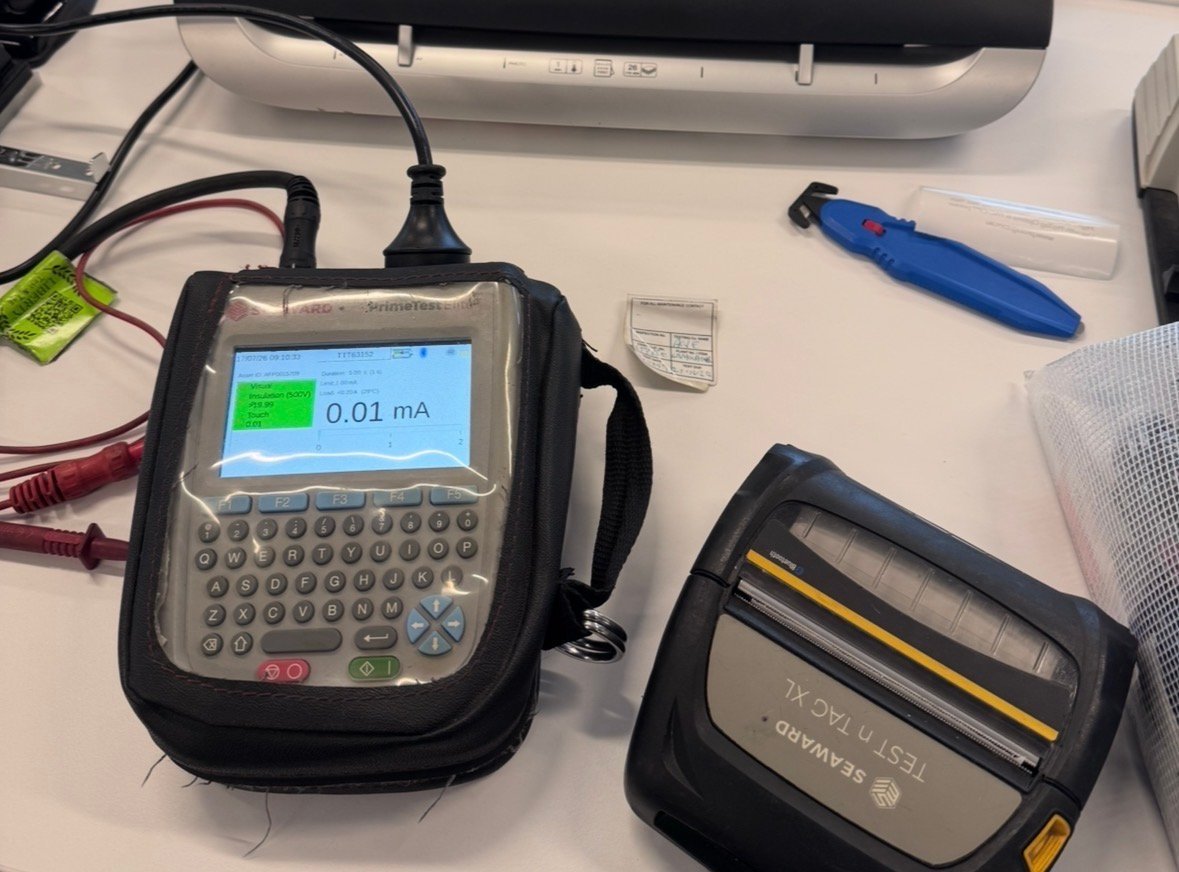
From 1 July 2026, approved Codes of Practice became minimum performance standards for NSW businesses.
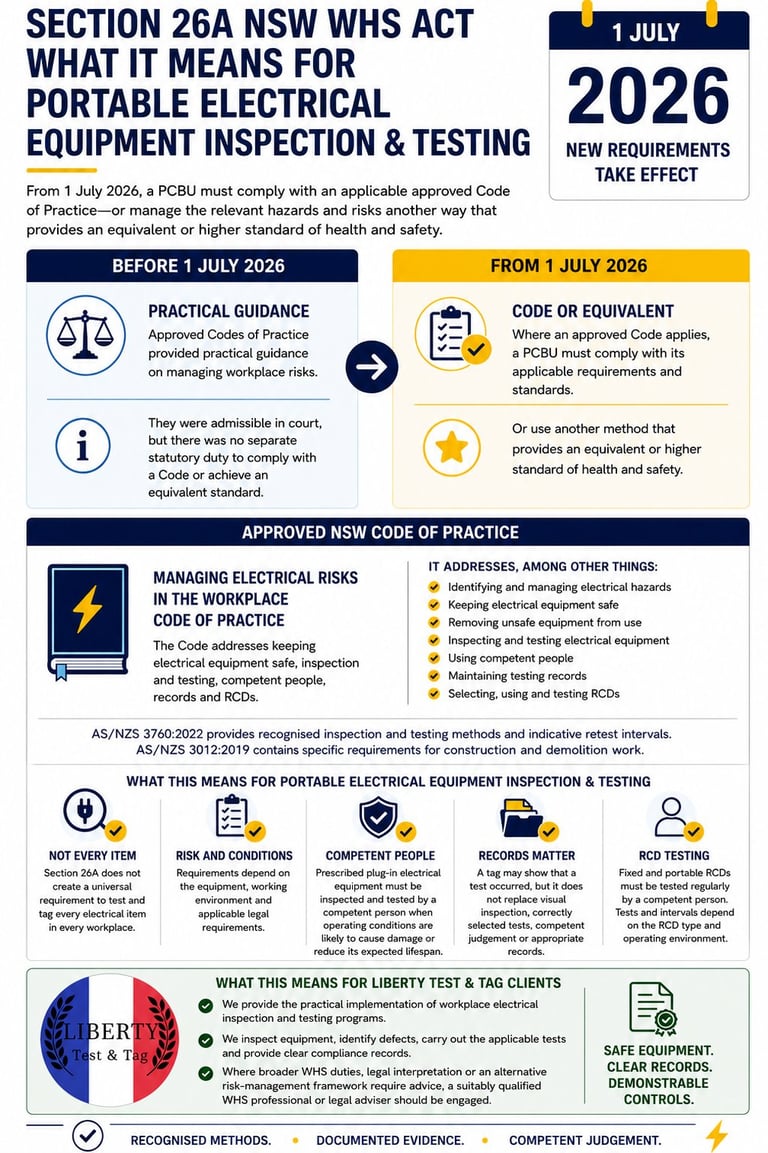
On 1 July 2026, section 26A of the Work Health and Safety Act 2011 (NSW) came into effect.
Before this change, approved Codes of Practice provided practical guidance on managing workplace risks. They were admissible in court and could be considered when determining what was reasonably practicable, but there was no separate statutory duty requiring a PCBU to comply with a Code or achieve an equivalent standard.
Section 26A changes that position.
Where an approved Code of Practice applies to hazards and risks arising from the work, a PCBU must now either:
SafeWork NSW describes Codes of Practice as minimum performance standards. It also explains that the language used within a Code is important:
The change does not remove flexibility, but it does increase accountability. A business using a different method should be prepared to demonstrate how that method manages the relevant hazards and risks to the required standard.
The central requirement is straightforward.
If the Minister has approved a Code of Practice, a PCBU must:
This means businesses can still adopt systems suited to their workplace, equipment and operating environment. However, an alternative method cannot be selected simply because it is cheaper, easier or has always been used.
The legal test concerns the standard of health and safety actually provided. Clear documentation does not create compliance by itself, but it can help a business demonstrate:
Depending on the circumstances, that evidence may include risk assessments, inspection records, test results, maintenance records, worker consultation and corrective-action records. A digital system may make records easier to trace and review, but section 26A does not require records to be digital.
Yes — but the alternative must provide an equivalent or higher standard of health and safety.
Different workplaces may require different controls. An office, commercial kitchen, workshop, warehouse and construction site do not expose electrical equipment to the same conditions or level of risk.
If a business departs from an applicable Code, it should be able to answer:
Simply saying, “We have always done it this way,” or, “Our contractor told us it was enough,” does not establish that the alternative meets the standard required by section 26A.
For many businesses, following the applicable Code will be the most straightforward approach. A business proposing a substantially different system should obtain competent WHS advice and ensure its decision is properly assessed and documented.
The approved Managing Electrical Risks in the Workplace Code of Practice applies to PCBUs that manage or control electrical equipment or electrical installations, as well as PCBUs carrying out electrical work on or near energised electrical equipment.
It addresses matters including:
The Code distinguishes between different operating environments.
Under the Work Health and Safety Regulation 2025, prescribed plug-in electrical equipment must be regularly inspected and tested by a competent person when it is used in operating conditions likely to cause damage or reduce its expected lifespan. These conditions can include exposure to moisture, heat, vibration, mechanical damage, corrosive chemicals or dust.
Lower-risk workplaces may still require inspection and testing, although the appropriate approach and frequency may differ. AS/NZS 3760:2022 provides recognised inspection and testing methods and indicative retest intervals for different equipment and operating environments.
For construction and demolition work, AS/NZS 3012:2019 applies specific electrical safety requirements reflecting the conditions encountered on those sites.
RCDs used at workplaces must also be tested regularly by a competent person to ensure they are working effectively. This requirement includes fixed and portable RCDs, although the applicable tests and intervals depend on the type of RCD and operating environment.
Section 26A does not replace these existing requirements. It strengthens the status of the Code as the benchmark against which a PCBU’s electrical risk controls may be assessed.
An effective electrical safety program is not simply a matter of attaching labels to power leads.
Inspection and testing may include:
These controls work together. A tag may provide evidence that a test occurred, but it does not replace a proper visual inspection, correctly selected electrical tests, competent judgement or appropriate records.
For many businesses, electrical testing can appear to be a simple transaction: a technician arrives, tests some appliances, prints tags, sends an invoice and leaves.
In practice, the value lies in the work behind the tag.
A competent inspection and testing program is designed to identify hazards, manage electrical risk and provide evidence of the work completed. It includes a thorough visual inspection, selection of the appropriate electrical tests, accurate interpretation of the results, identification of unsafe equipment and proper recording of each outcome.
This is why selecting an electrical testing provider should involve more than comparing the price per tag.
A business should understand:
The tag is the most visible part of the process. The real value lies in the inspection, testing, competent judgement and records supporting the workplace's electrical safety system.
Section 26A provides a good reason for NSW businesses to review how workplace risks are being managed. For many businesses, this will not require a complete overhaul. It may simply confirm that existing practices are appropriate and properly implemented.
Businesses should consider:
Liberty Test & Tag's role is the practical implementation of workplace electrical inspection and testing programs. We inspect equipment, identify defects, carry out the applicable tests and provide clear compliance records. For businesses in Greater Sydney, our Sydney compliance guide covers local requirements across the city's major growth corridors and industrial precincts.
Where a business requires advice on broader WHS duties, legal interpretation or an alternative risk-management framework, it should engage a suitably qualified WHS professional or obtain legal advice.
If you are unsure whether your present inspection and testing arrangements suit your workplace, now is a sensible time to review them.
Liberty Test & Tag can help identify the electrical equipment and RCD testing required within our scope, carry out the inspection and testing, and provide clear records of the results.
Contact Liberty Test & TagRelated Reading
Section 26A strengthens the status of Codes of Practice, but does it change whether your workplace needs to test and tag? Read the related guide.