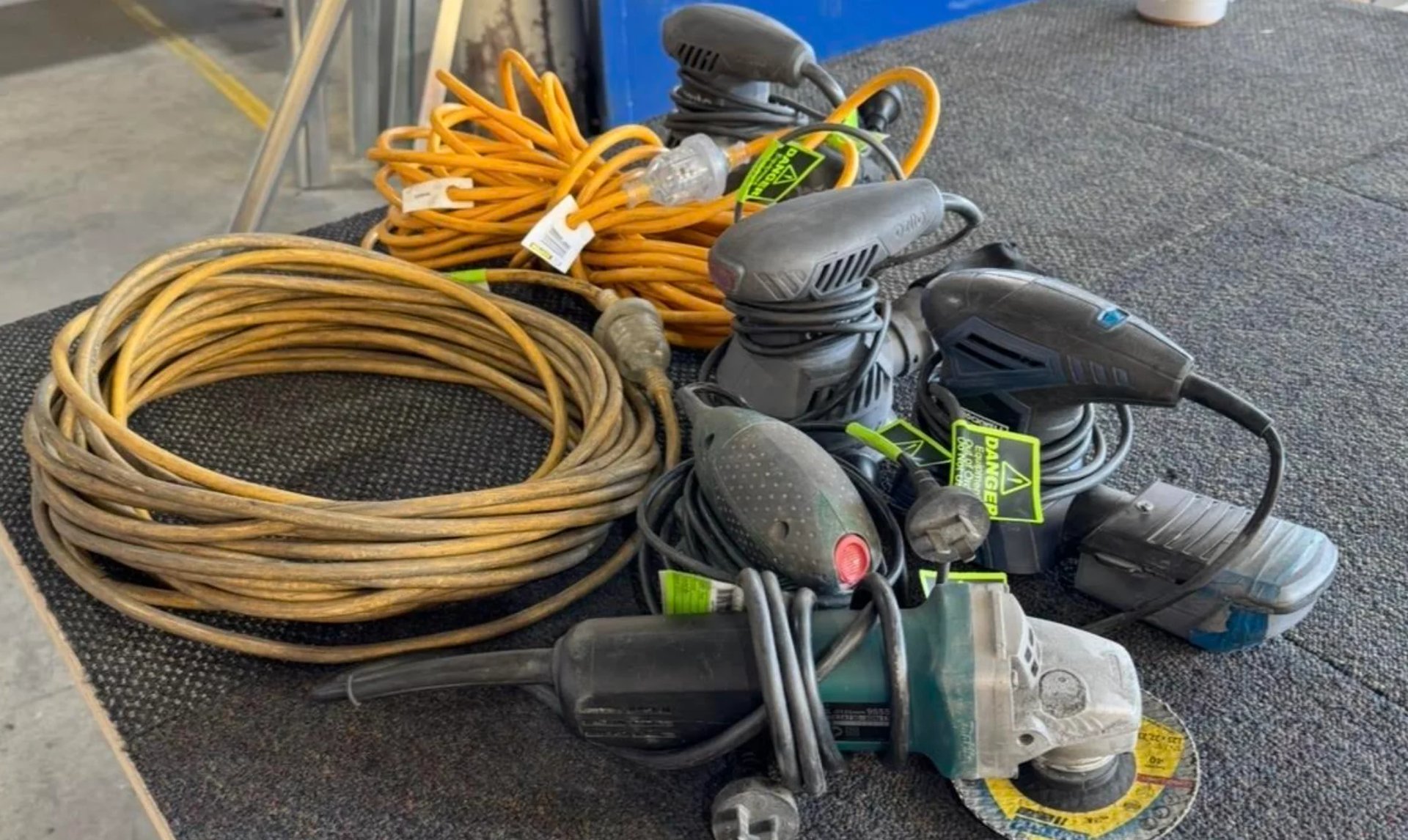
Test and tag is not specifically mandated by NSW law. However, employers must ensure electrical equipment is inspected and tested where there is a risk of damage or deterioration. Test and tag is the recognised method for demonstrating compliance with these legal obligations and maintaining a safe workplace.
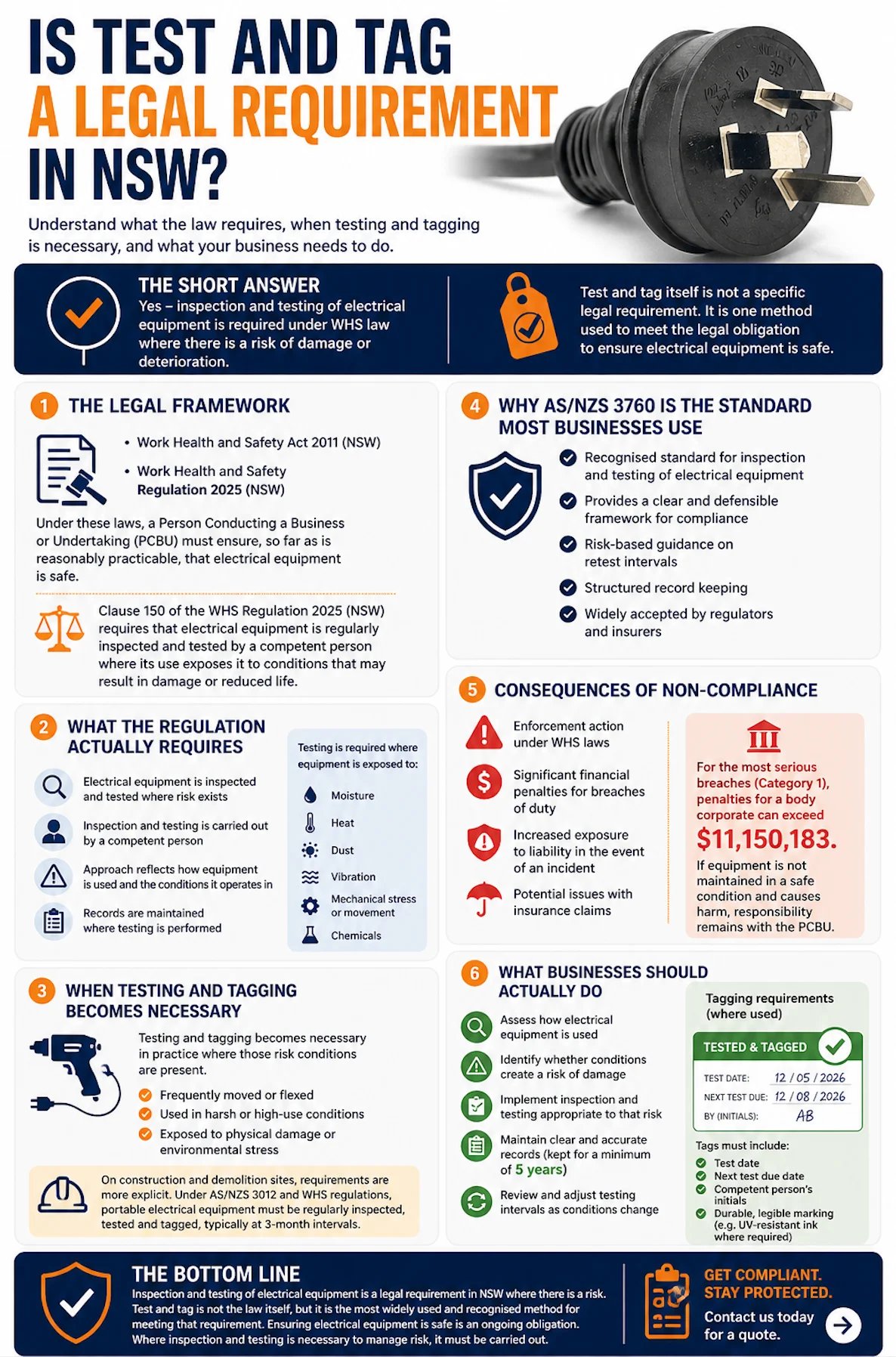
Electrical safety in NSW is governed by:
Under these laws, a Person Conducting a Business or Undertaking (PCBU) must ensure, so far as is reasonably practicable, that electrical equipment is safe.
Clause 150 of the WHS Regulation 2025 (NSW) requires that electrical equipment is regularly inspected and tested by a competent person where its use exposes it to conditions that may result in damage or reduced life.
The regulation does not prescribe a fixed method or universal schedule. It requires that:
Where equipment is exposed to conditions such as:
…inspection and testing is required to manage that risk.
Testing and tagging becomes necessary in practice where those risk conditions are present.
This includes environments where equipment is:
In these situations, inspection and testing is not optional — it is required to meet WHS obligations.
On construction and demolition sites, requirements are more explicit. Under AS/NZS 3012 and WHS regulations, portable electrical equipment must be regularly inspected, tested, and tagged, typically at 3-month intervals.
AS/NZS 3760 is the recognised standard for inspection and testing of electrical equipment.
It provides:
Following AS/NZS 3760 is widely accepted as demonstrating compliance with WHS obligations, as it provides a clear and defensible framework.
Failing to inspect and test electrical equipment where required can result in:
For the most serious breaches (Category 1), penalties for a body corporate can exceed $11 million.
If equipment is not maintained in a safe condition and causes harm, responsibility remains with the PCBU.
To meet legal obligations, businesses should:
Where testing and tagging is used, compliance tags should include:
Where there is uncertainty, engaging a competent provider ensures inspection and testing is carried out in line with recognised standards.
Understanding test and tag requirements NSW is essential — inspection and testing of electrical equipment is a legal requirement where there is a risk.
Test and tag is not the law itself, but it is the most widely used and recognised method for meeting that requirement.
Ensuring electrical equipment is safe is an ongoing obligation. Where inspection and testing is necessary to manage risk, it must be carried out.
Liberty Test & Tag provides professional inspection and testing services across NSW & ACT. Contact us for a free quote.
Get a Free Quote