In the world of business operations, electrical safety is often viewed as a minor administrative hurdle, a line item on a spreadsheet or a box to be ticked once a year.
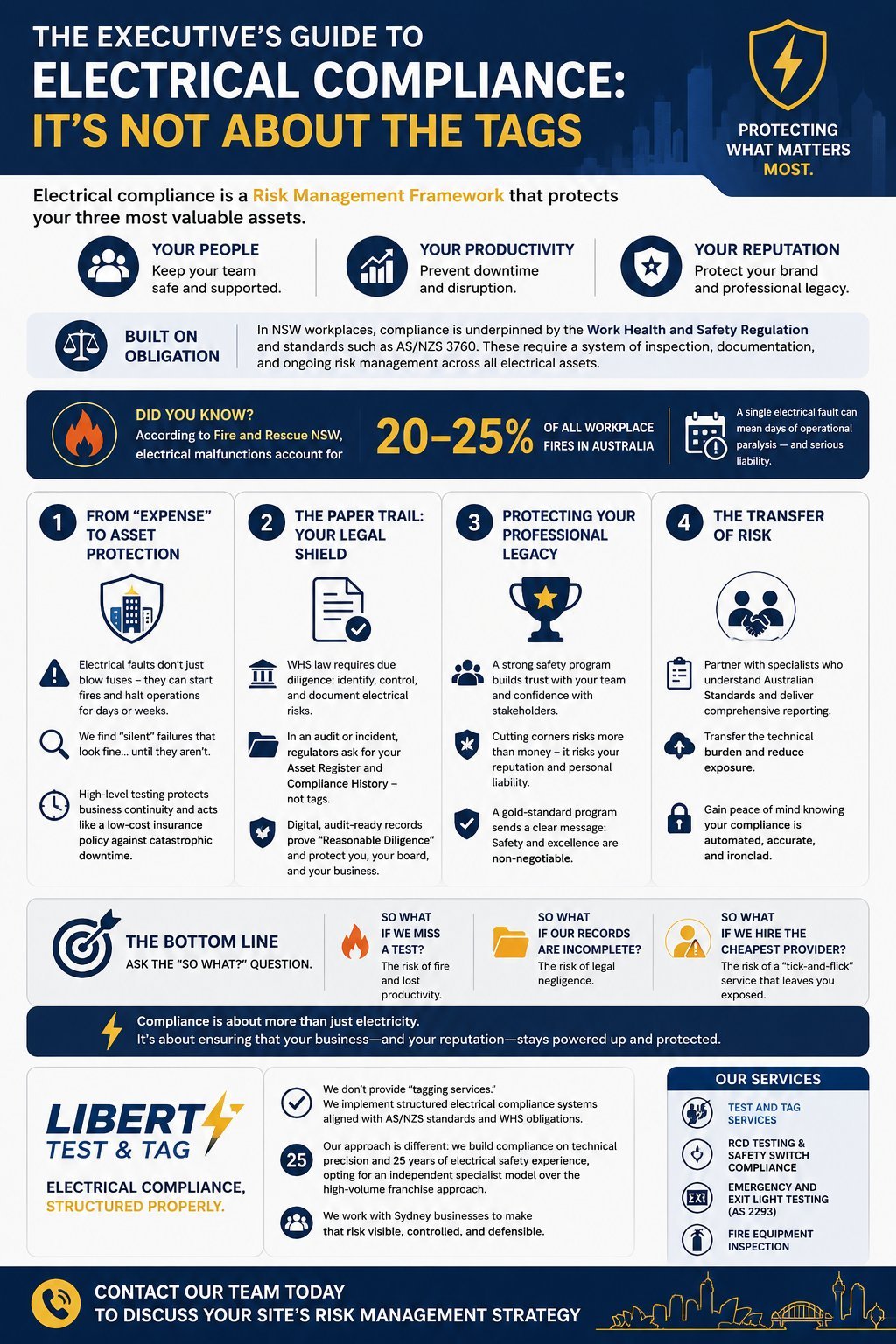
However, for a Director, CEO, or Business Owner, viewing compliance through the lens of "cords and plugs" is a significant oversight. When you look deeper, electrical safety isn't a maintenance task; it is a Risk Management Framework that protects your three most valuable assets: your people, your productivity, and your professional reputation.
If you've ever wondered why a high-standard compliance program matters more than a "cheap and quick" service, here is the professional perspective.
In NSW workplaces, this framework is underpinned by obligations within the Work Health and Safety Regulation and standards such as AS/NZS 3760. These require not just testing, but a system of inspection, documentation, and ongoing risk management across all electrical assets.
📊 Did you know?
According to Fire and Rescue NSW, electrical malfunctions account for 20–25% of all workplace fires in Australia. For business owners, a single electrical fault can mean days of operational paralysis — not to mention the liability.
1. From "Expense" to "Asset Protection"
A single electrical fault in a server rack, a distribution board, or even a staff lunchroom doesn't just blow a fuse. It can trigger a fire that halts operations for days or weeks.
We routinely see failed RCDs in office switchboards or damaged leads in warehouse environments that have been "visually fine" for months — until they aren't.
When we talk about saving time, we aren't just talking about technician efficiency. We are talking about Business Continuity. A professional compliance program identifies "silent" failures before they become "catastrophic" downtime. Investing in high-level testing is essentially a low-cost insurance policy against operational paralysis.
2. The Paper Trail: Your Legal Shield
Under WHS law, officers must exercise due diligence. That includes verifying that electrical risks are identified, controlled, and documented. If your records don't exist or can't be produced, neither does your defence. In the event of an audit or a workplace incident, a regulator won't ask if you have tags on your cords; they will ask for your Asset Register and Compliance History.
A professional service provides a digital, audit-ready paper trail. This documentation proves "Reasonable Diligence." It demonstrates to the board, to shareholders, and to regulatory bodies that you have a robust system of governance in place. It transforms a potential liability into a verified safety record.
3. Protecting Your Professional Legacy
Every leader wants to be remembered for building a high-performance culture, not for a preventable safety failure.
Cutting corners on compliance might save a few dollars in the short term, but the "cost of failure" includes the loss of staff trust, damage to your brand's reputation, and potential personal liability. By maintaining a gold-standard safety program, you send a clear message to your team: This is a professional workplace where safety and excellence are non-negotiable.
4. The Transfer of Risk
The goal of any executive is to mitigate and transfer risk wherever possible. By partnering with a specialist who understands the intricacies of Australian Standards and provides comprehensive reporting, you effectively transfer the technical burden of electrical safety away from your desk.
You aren't just paying for a technician to walk around your office; you are paying for the peace of mind that comes with knowing your compliance is automated, accurate, and ironclad.
The Bottom Line
Next time you review your safety budget, ask the "So what?" question.
- So what if we miss a test? (The risk of fire and lost productivity.)
- So what if our records are incomplete? (The risk of legal negligence.)
- So what if we hire the cheapest provider? (The risk of a "tick-and-flick" service that leaves you exposed.)
Compliance is about more than just electricity. It's about ensuring that your business—and your reputation—stays powered up and protected.
Liberty Test & Tag: Electrical Compliance, Structured Properly
We don't provide "tagging services." We implement structured electrical compliance systems aligned with AS/NZS standards and WHS obligations.
Our approach is different: we build compliance on technical precision and 25 years of electrical safety experience, opting for an independent specialist model over the high-volume franchise approach.
We work with Sydney businesses to make that risk visible, controlled, and defensible.
- Test and Tag Services
- RCD Testing & Safety Switch Compliance
- Emergency and Exit Light Testing (AS 2293)
- Fire Equipment Inspection
Contact our team today to discuss your site's Risk Management strategy