TL;DR
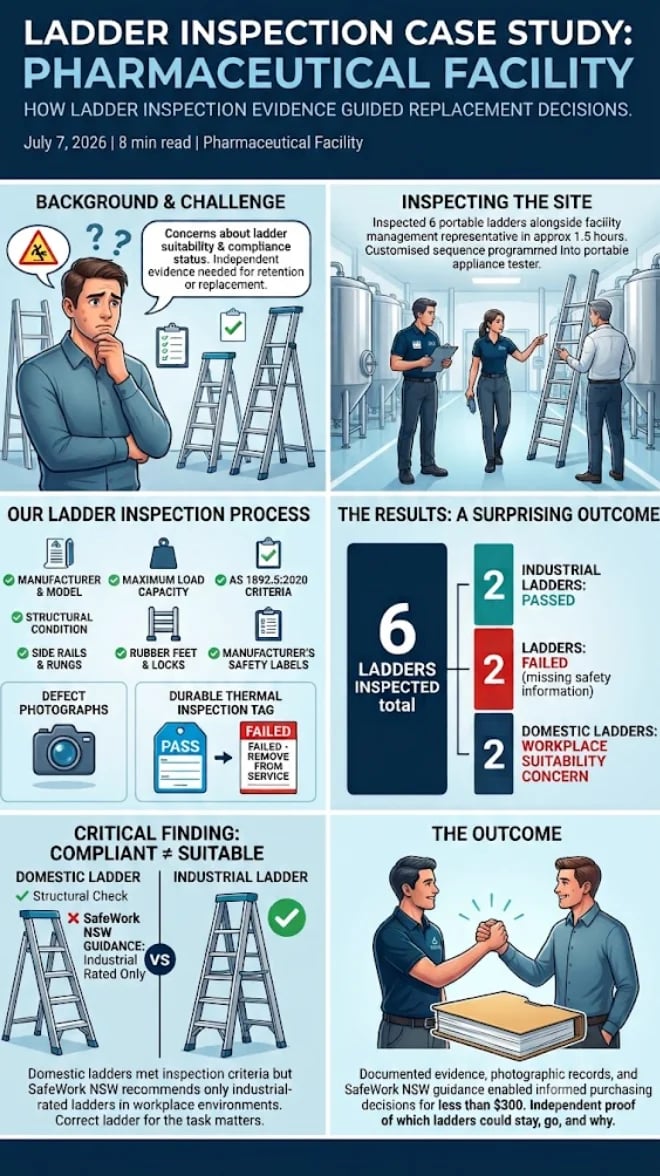
A pharmaceutical facility engaged Liberty Test & Tag to inspect six portable ladders and determine which could remain in service. The inspection identified failed ladders, documented defects, and highlighted that compliant does not always mean suitable. Helping management make informed replacement decisions based on evidence.
A facilities manager at a pharmaceutical facility contacted Liberty Test & Tag as he had concerns about the suitability and compliance status of portable ladders on site.
Falls from heights remain one of the leading causes of serious workplace injuries, and management wanted independent evidence to determine which portable ladders could remain in service, which required replacement, and most importantly, why.
After finding Liberty Test & Tag through a Google search, the client requested a ladder inspection service for six portable ladders located throughout the facility.
The inspection was carried out against criteria aligned with AS 1892.5:2020, the Australian Standard that sets out the minimum requirements and recommended safe practices for the selection, safe use and care of portable ladders.
The inspection took approximately 1.5 hours and was completed alongside the facility's management representative.
Walking the site together meant every ladder could be assessed in real time while explaining what was being inspected, why it mattered and how each decision was reached.
The site contained six portable ladders consisting of:
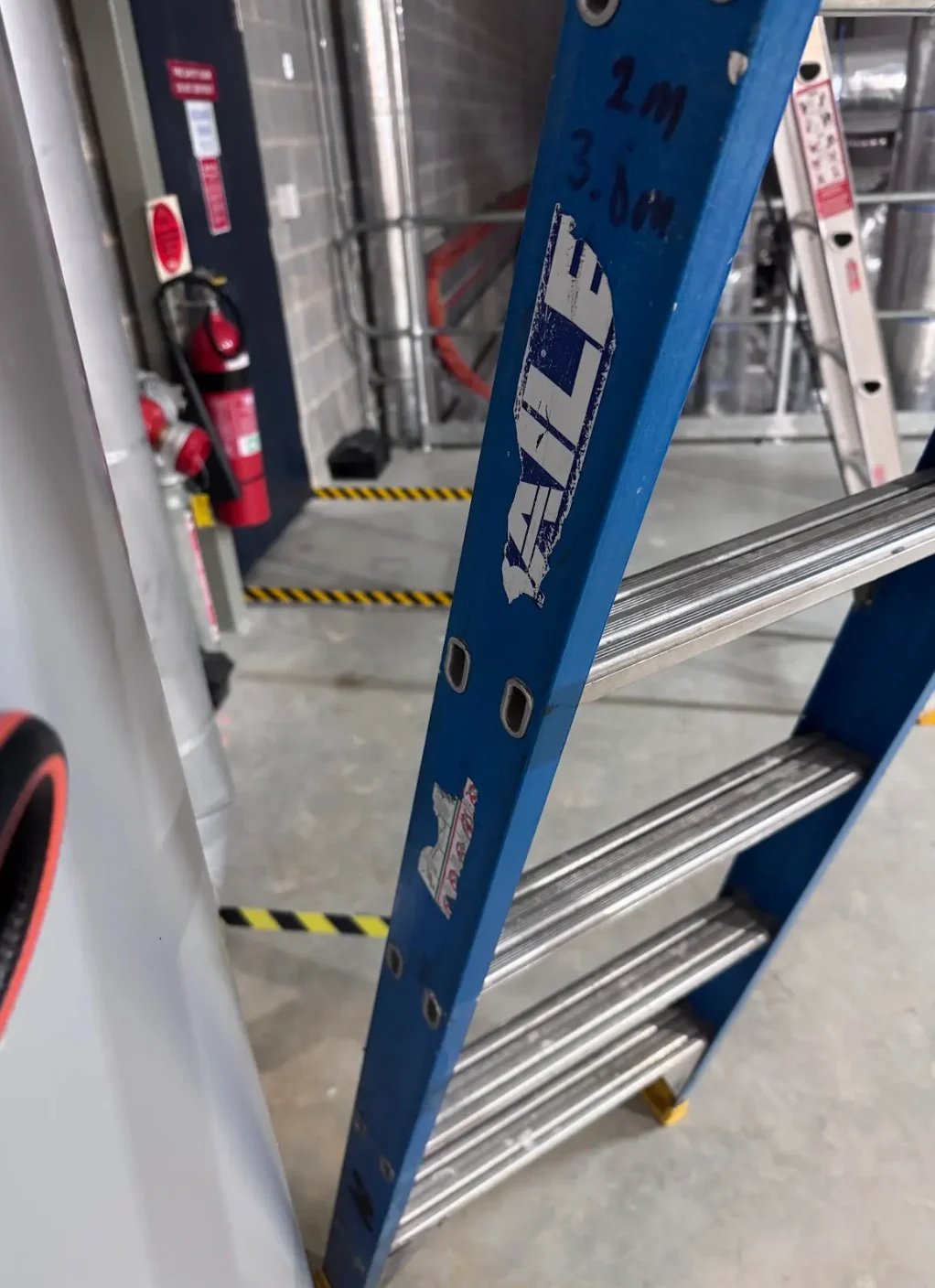
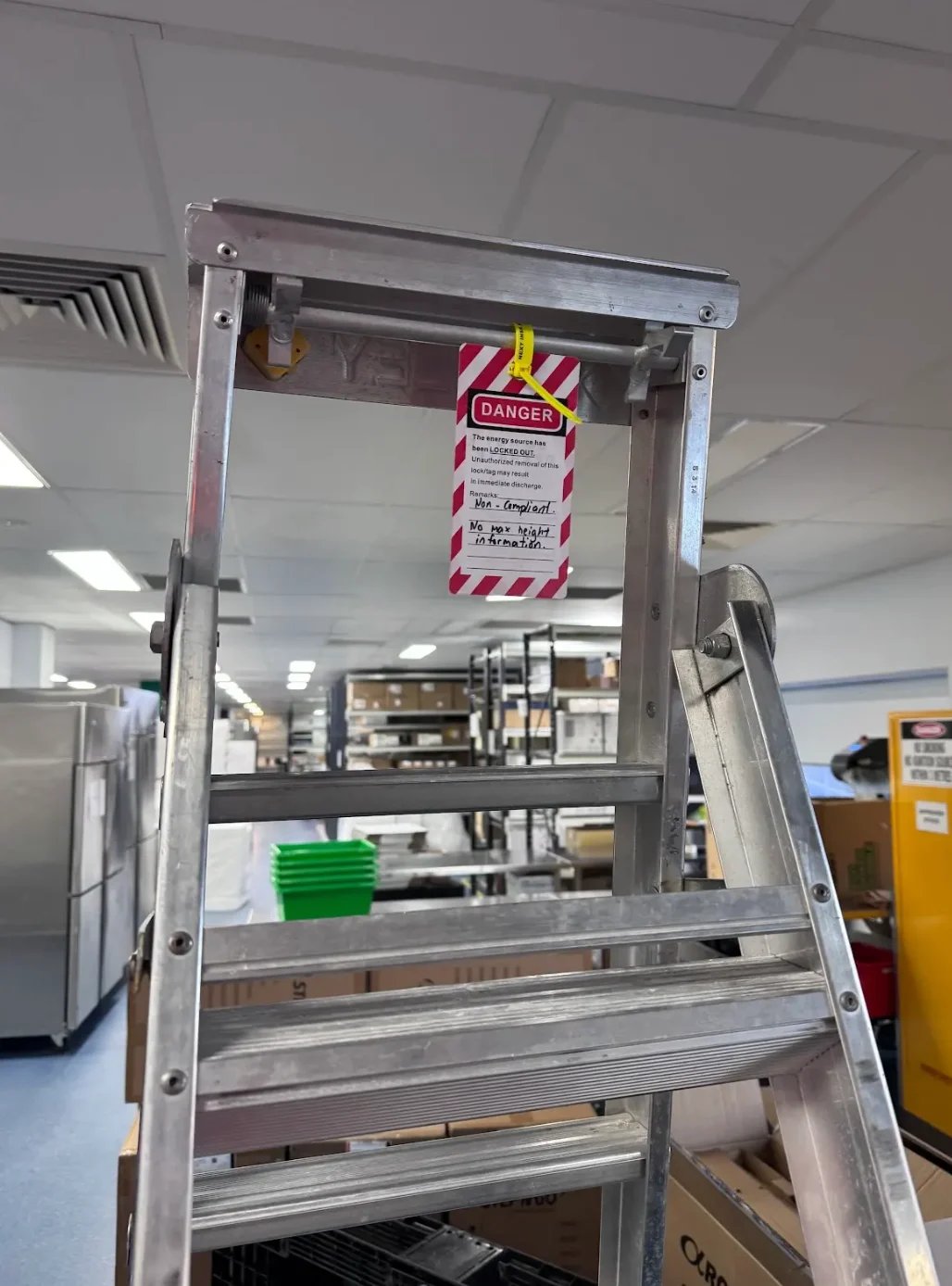
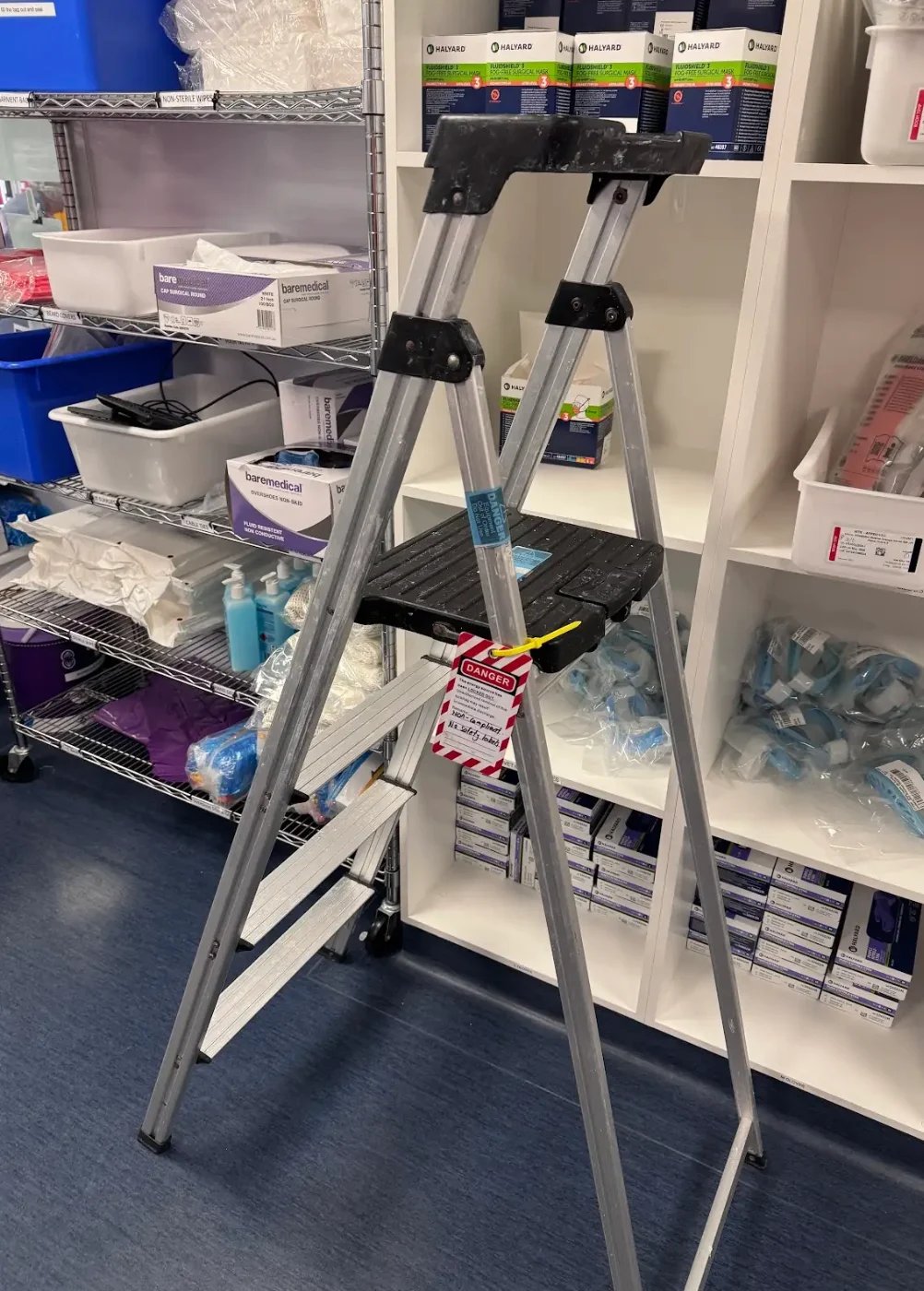
A contractor's ladder was also observed during the visit. Although it was not included in the formal inspection, it was immediately identified as unsuitable because the manufacturer's safety label was missing and critical information had been handwritten directly onto the ladder. See below.
Every ladder was individually identified before the inspection commenced.
Using a customised ladder inspection sequence programmed into our portable appliance tester, we recorded:
Each ladder was then inspected against criteria aligned with AS 1892.5:2020. The inspection included checking:
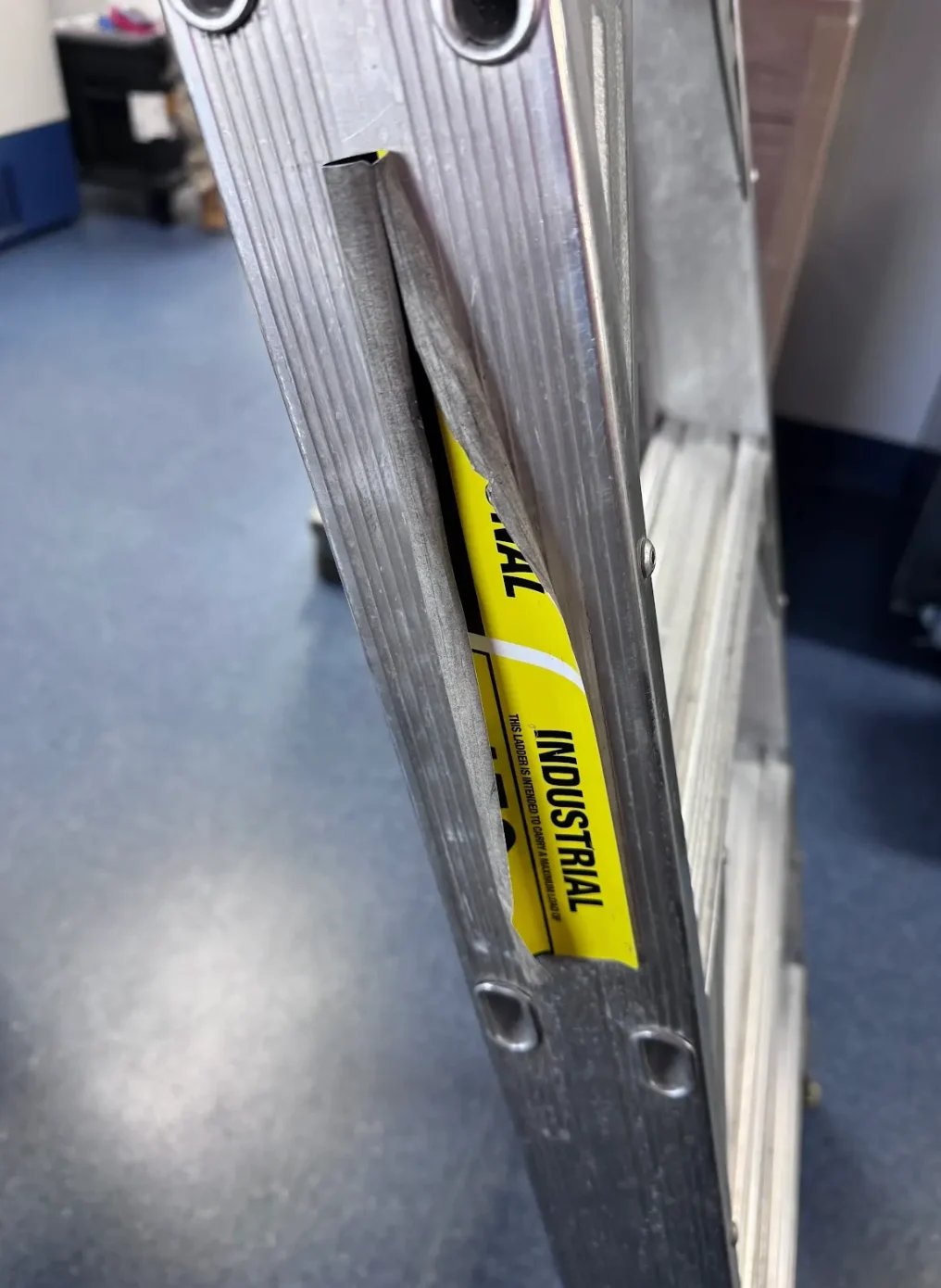
Where defects were identified, photographs were taken with the portable appliance tester and attached to the individual inspection record as supporting evidence.
Every compliant ladder received a durable thermal inspection tag protected by a clear overlay to maximise service life, particularly where ladders may be exposed to outdoor conditions.
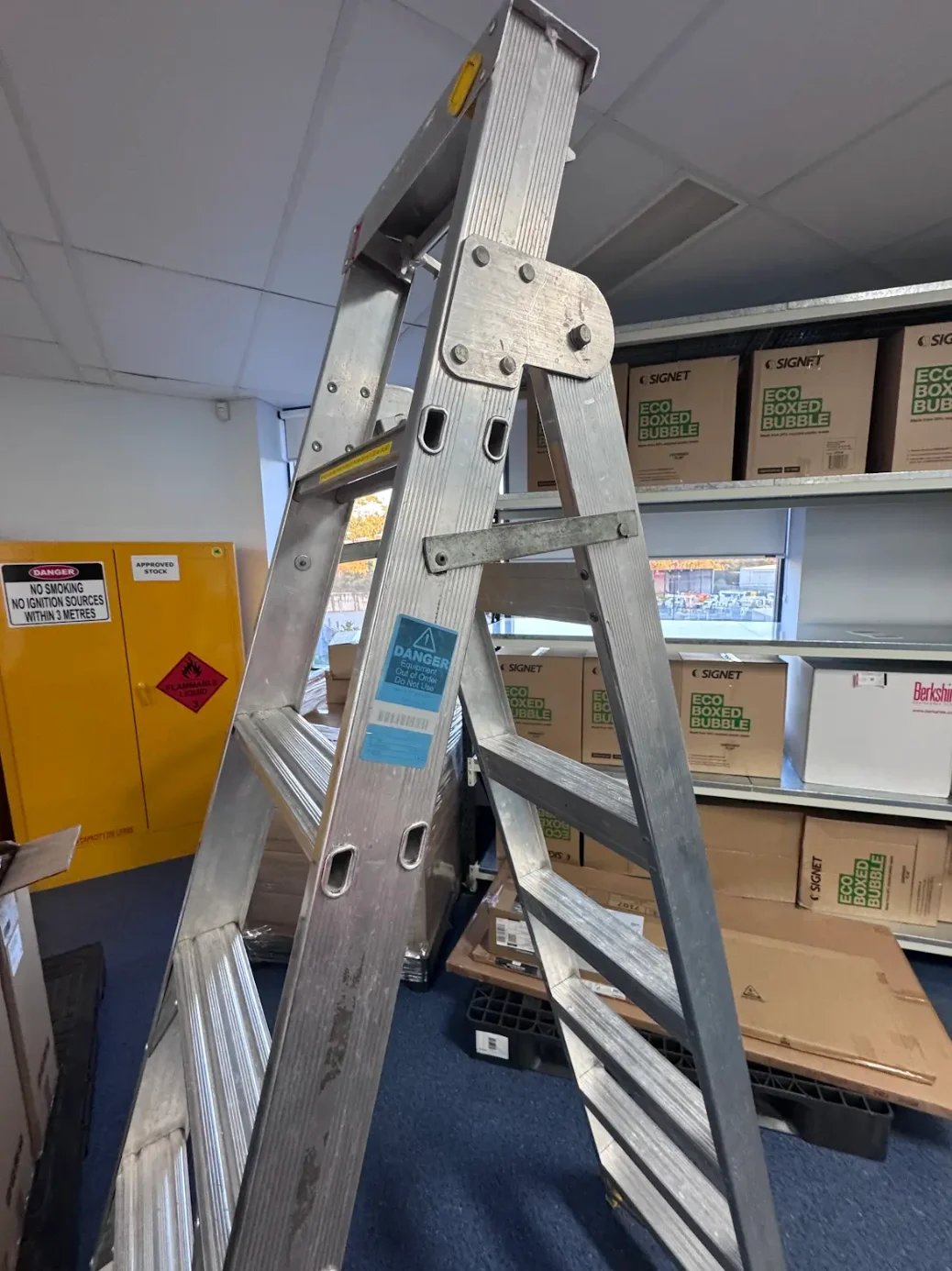
Ladders that failed inspection were immediately fitted with a Tag Out notice identifying the reason they had been removed from service, and a failed tag with an individual asset number to track this record.
The inspection produced an interesting outcome. Of the six ladders inspected:
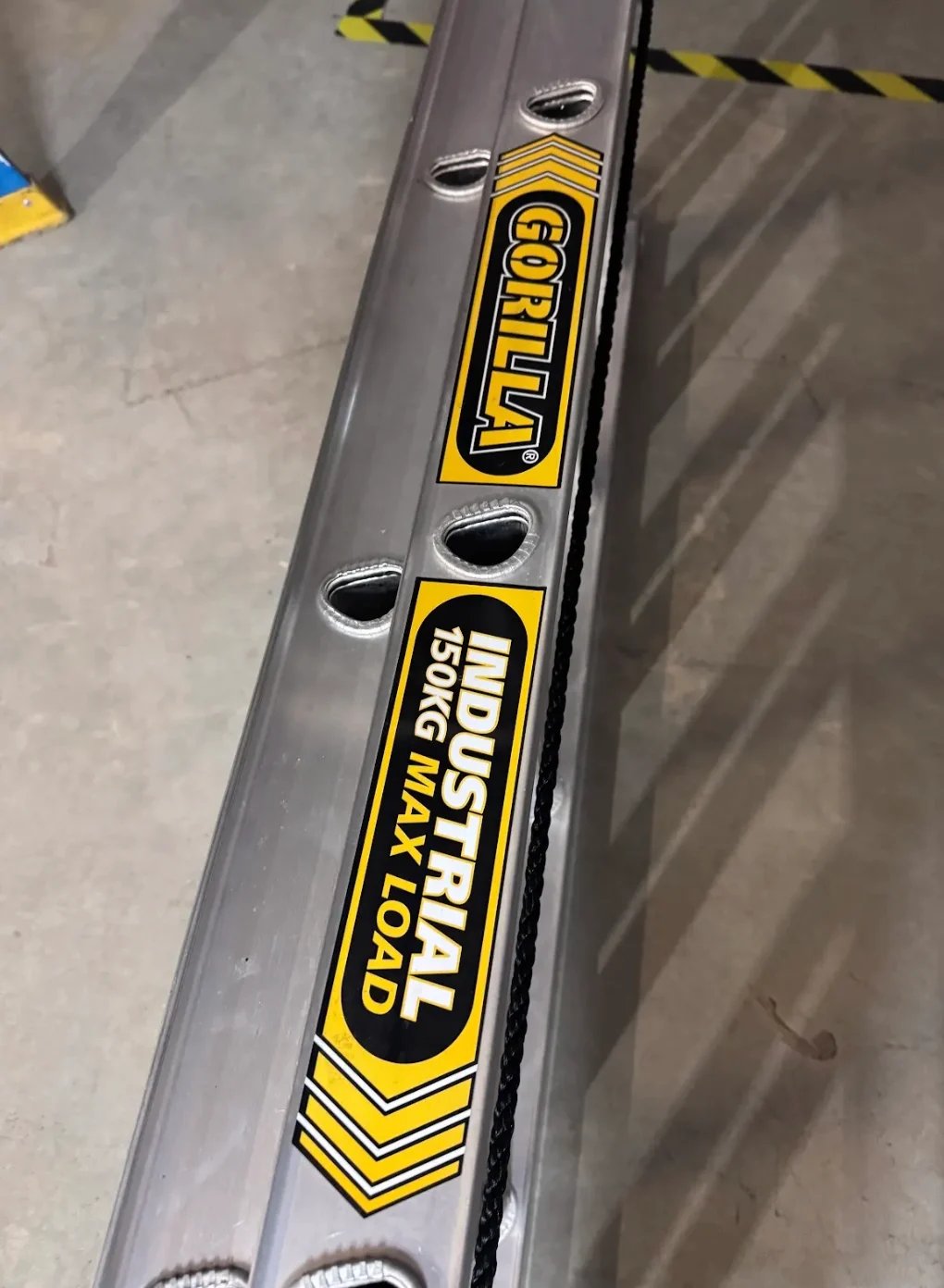
Industrial ladders
passed inspection
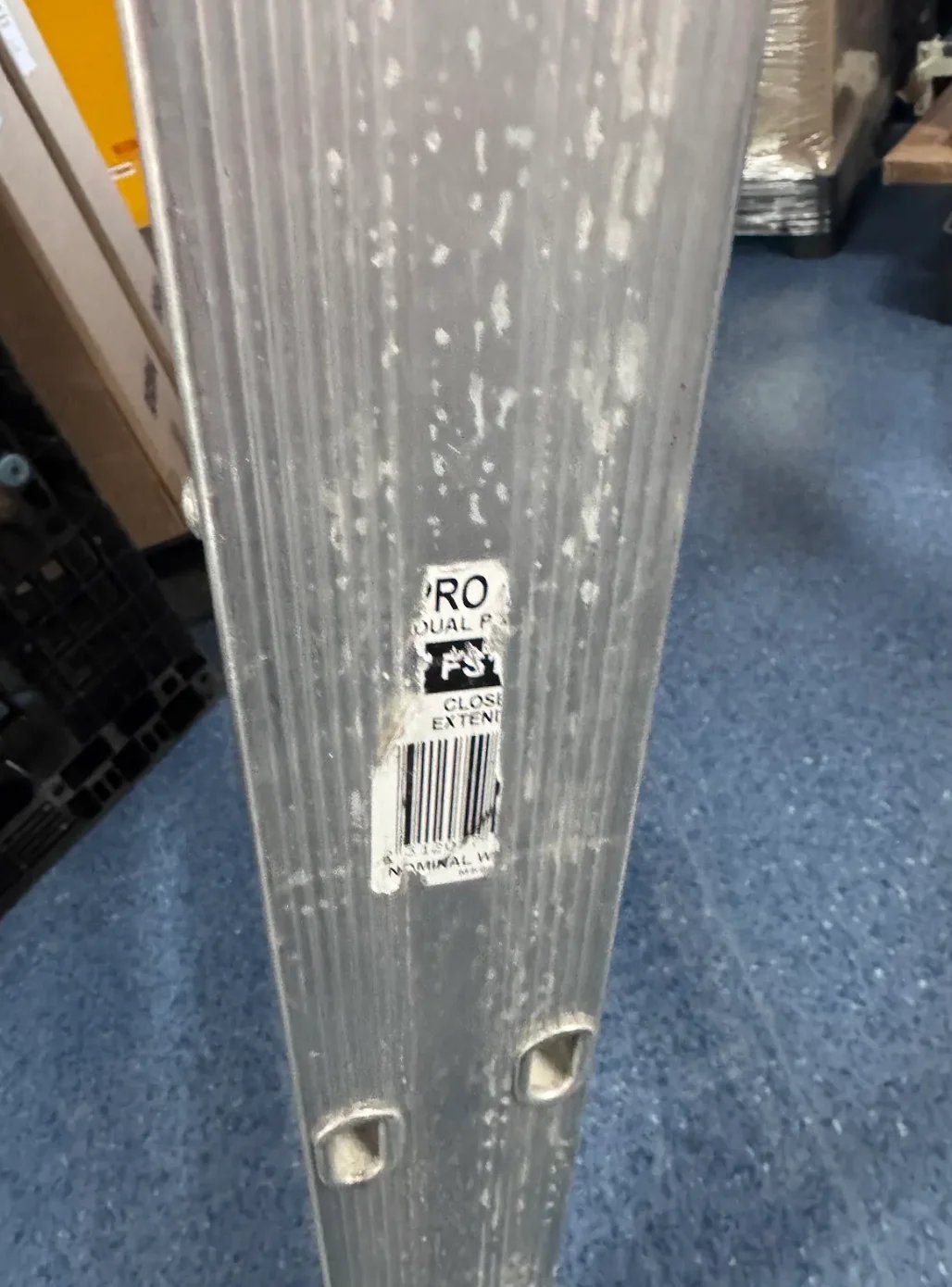
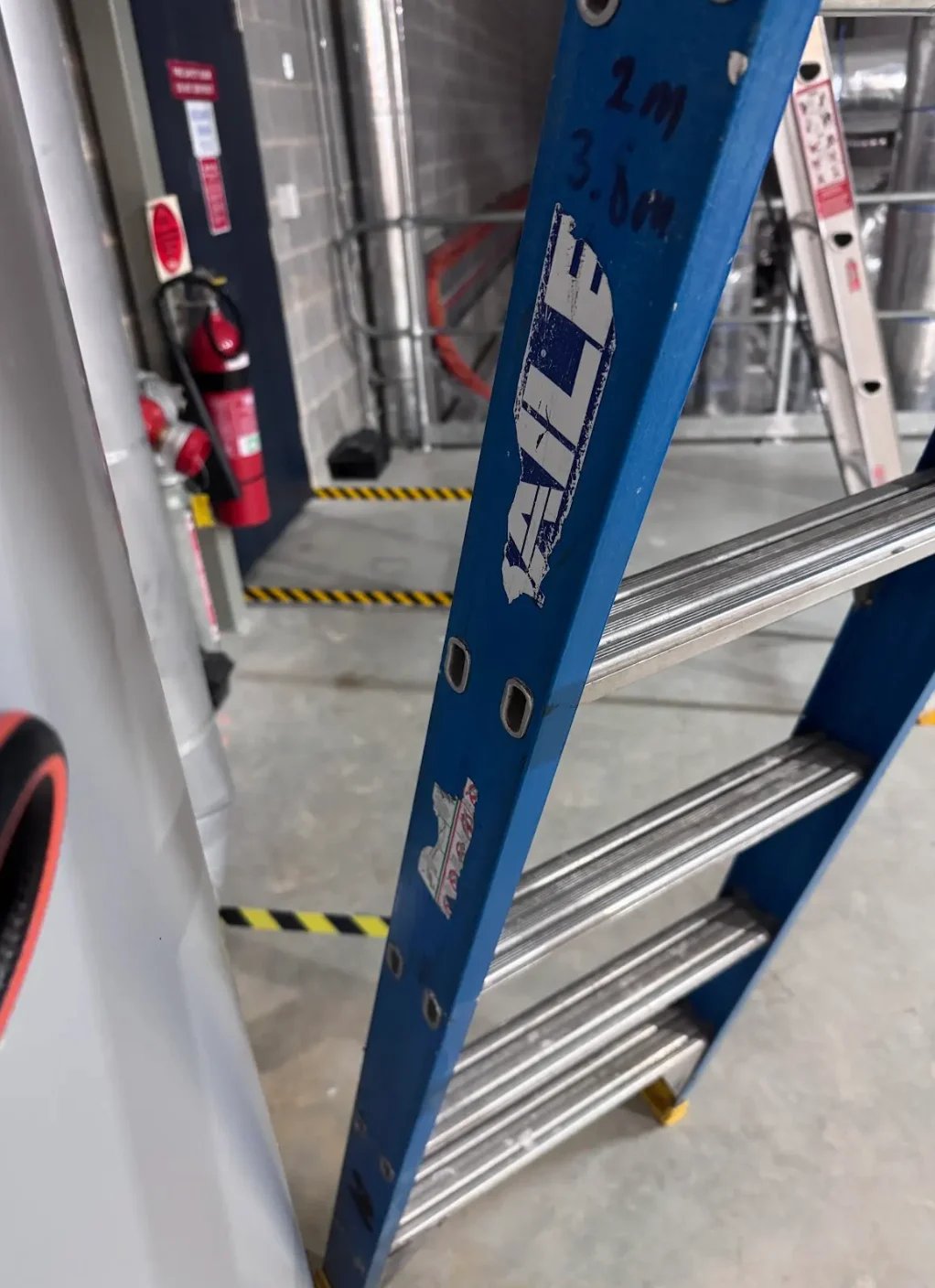
Ladders failed — missing safety information
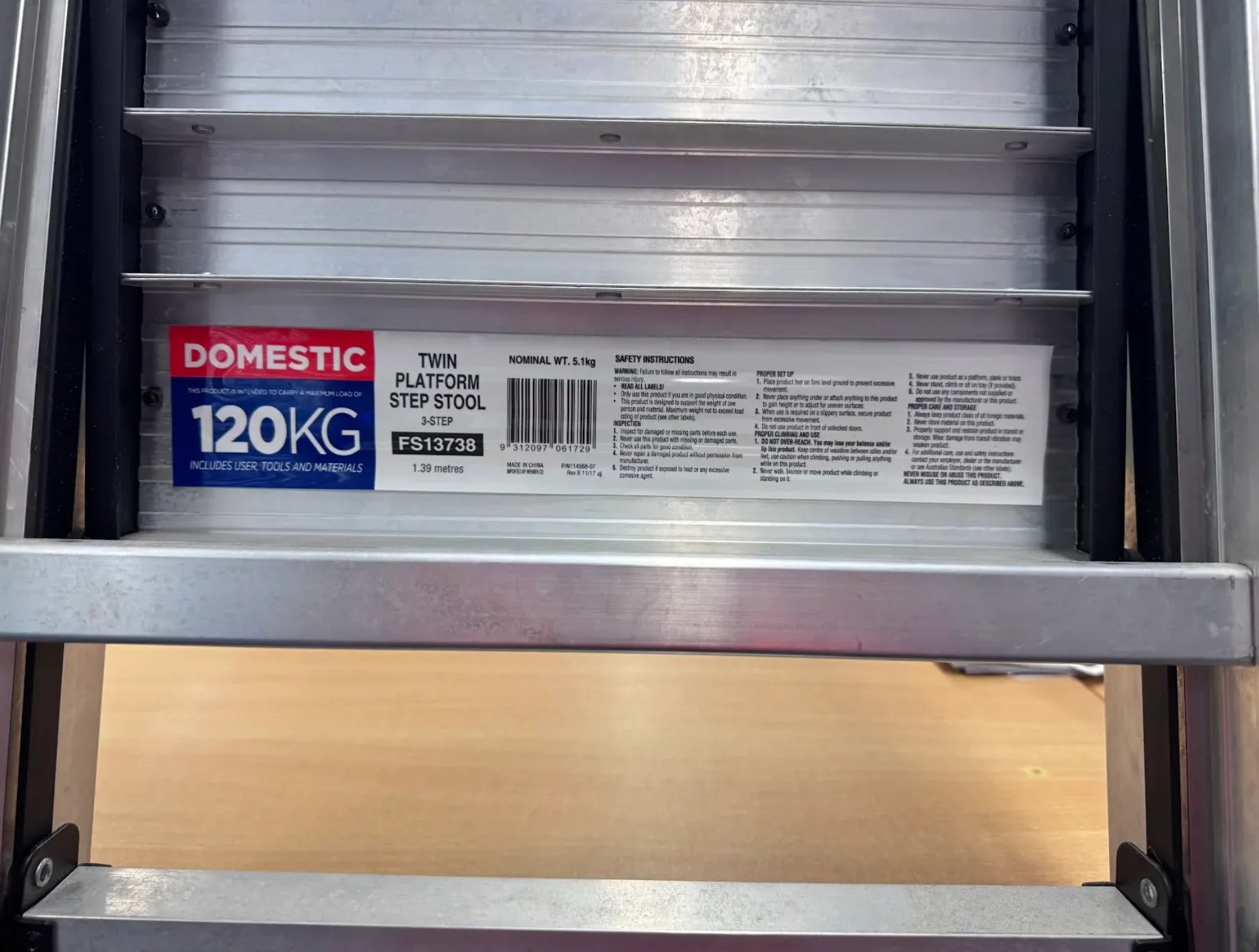
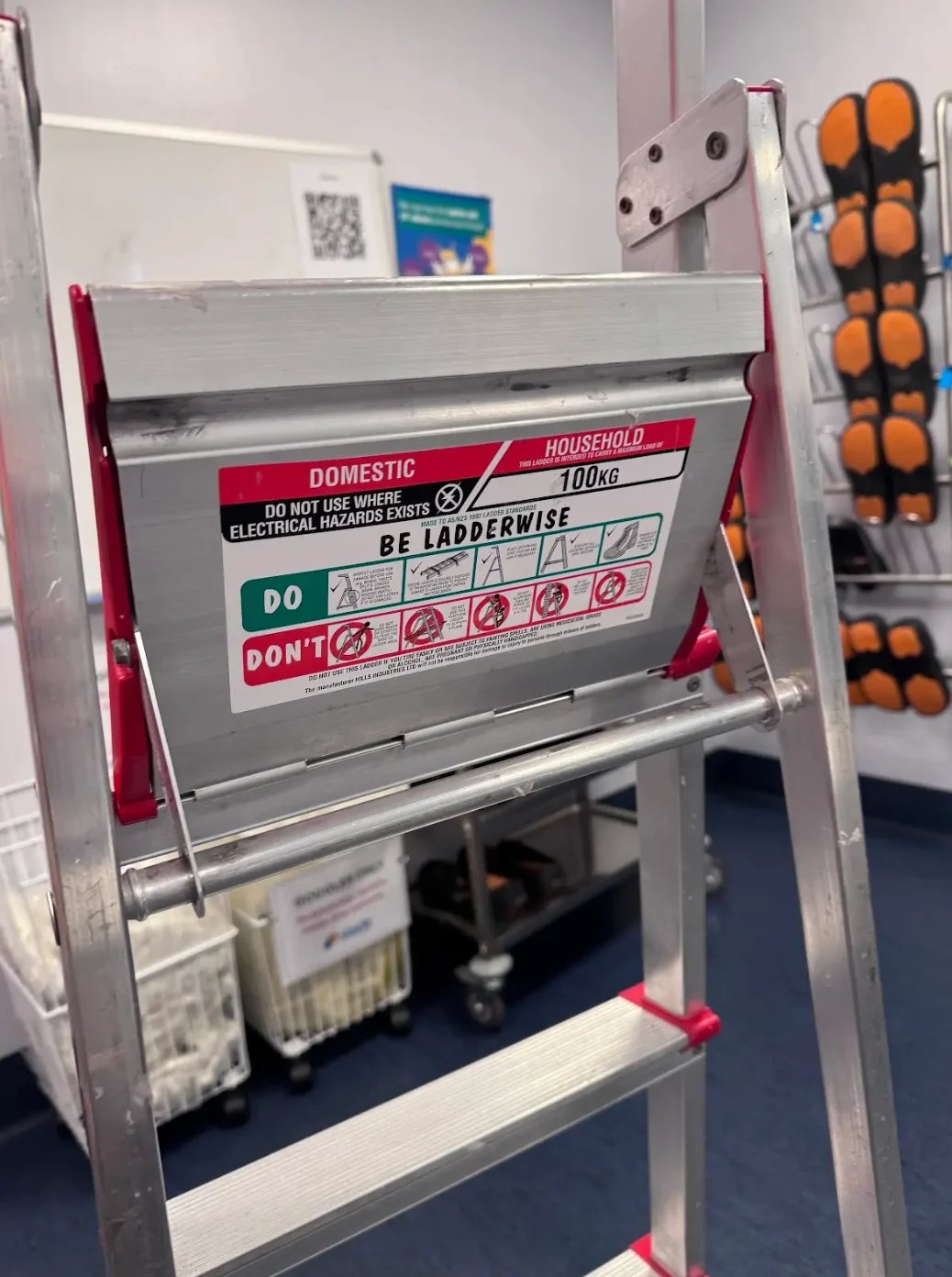
Domestic ladders — workplace suitability concern
2 industrial ladders passed inspection. 2 ladders failed because essential manufacturer safety information was missing. 2 domestic ladders met the inspection criteria but raised a separate workplace safety issue.
Initially, the domestic ladders appeared acceptable. However, following the site visit we reviewed additional SafeWork NSW guidance relating to ladder selection in workplaces:
While the ladders met the inspection criteria, SafeWork NSW guidance recommends selecting the correct ladder for the task and using industrial-rated ladders in workplace environments. For a pharmaceutical facility where ladders may be used regularly, the domestic ladders were not appropriate for use in the workplace. Only industrial rated ladders are to be used on worksites.
Inspection Gallery
This became the most significant finding of the inspection.
The biggest issue was not damaged ladders. It was selecting the correct ladder for the environment.
Simply recording "Pass" or "Fail" would not have helped management justify replacing equipment.
Instead, every non-compliant ladder was photographed, tagged out where required and documented individually.
Following the inspection, we also reviewed relevant SafeWork NSW publications, including guidance on ladder selection, and provided those references to the client. This gave management independent supporting information that could be shared internally when seeking approval to replace unsuitable ladders.
The final documentation included:
One outcome surprised both us and the client.
A ladder can satisfy the inspection criteria and still be the wrong ladder for the workplace.
The domestic ladders were structurally compliant, yet further consideration of SafeWork NSW guidance showed that industrial-rated ladders were the more appropriate choice for the work being undertaken within the facility.
That distinction gave management the evidence needed to make informed purchasing decisions rather than relying on assumption or opinion.
The entire inspection was completed in approximately 1.5 hours.
For less than $300, the client received:
Most importantly, the facilities manager received independent evidence showing exactly which ladders could remain in service, which required replacement and the reasons behind every decision.
If your organisation needs a documented ladder inspection, or test & tag in Sydney, to help support replacement decisions, workplace compliance or ongoing asset management, our Ladder Inspection Service provides practical inspections backed by clear documentation, photographic evidence and audit-ready reporting.
Many clients also combine ladder inspections with our Portable Appliance Testing and Electrical Compliance Reporting services, allowing multiple workplace compliance activities to be completed during a single site visit.
Contact us about ladder inspections