Sydney, NSW | Construction, Façade Remediation & Difficult-Access Environments
Electrical equipment operating on live construction and difficult-access sites is exposed to significantly harsher conditions than standard commercial environments.
Portable electrical equipment used on façade remediation and difficult-access construction sites is exposed to ongoing environmental and mechanical stress throughout daily operations. Dust, vibration, UV exposure, moisture, and repeated handling and repositioning of extension leads in active construction environments can all accelerate equipment deterioration in ways rarely seen within standard commercial environments.
SafeWork NSW identifies falls from heights as a primary cause of traumatic injuries and fatalities at NSW workplaces, particularly within the construction industry. Working at height environments require multiple risk-control systems working together to reduce uncontrolled hazards, including site-specific planning, fall protection systems, rescue readiness, safe work procedures, and equipment compliance.
This case study explores how harsh façade and difficult-access construction environments can accelerate electrical equipment deterioration, and why compliant inspection, testing, and monitoring systems are critical for reducing uncontrolled risk on active construction projects.
Key Point
Hostile construction environments place electrical equipment under constant stress — and in difficult-access positions, the consequences of equipment failure reach far beyond the equipment itself. Compliant inspection and monitoring systems are a critical component of safe construction site operations.
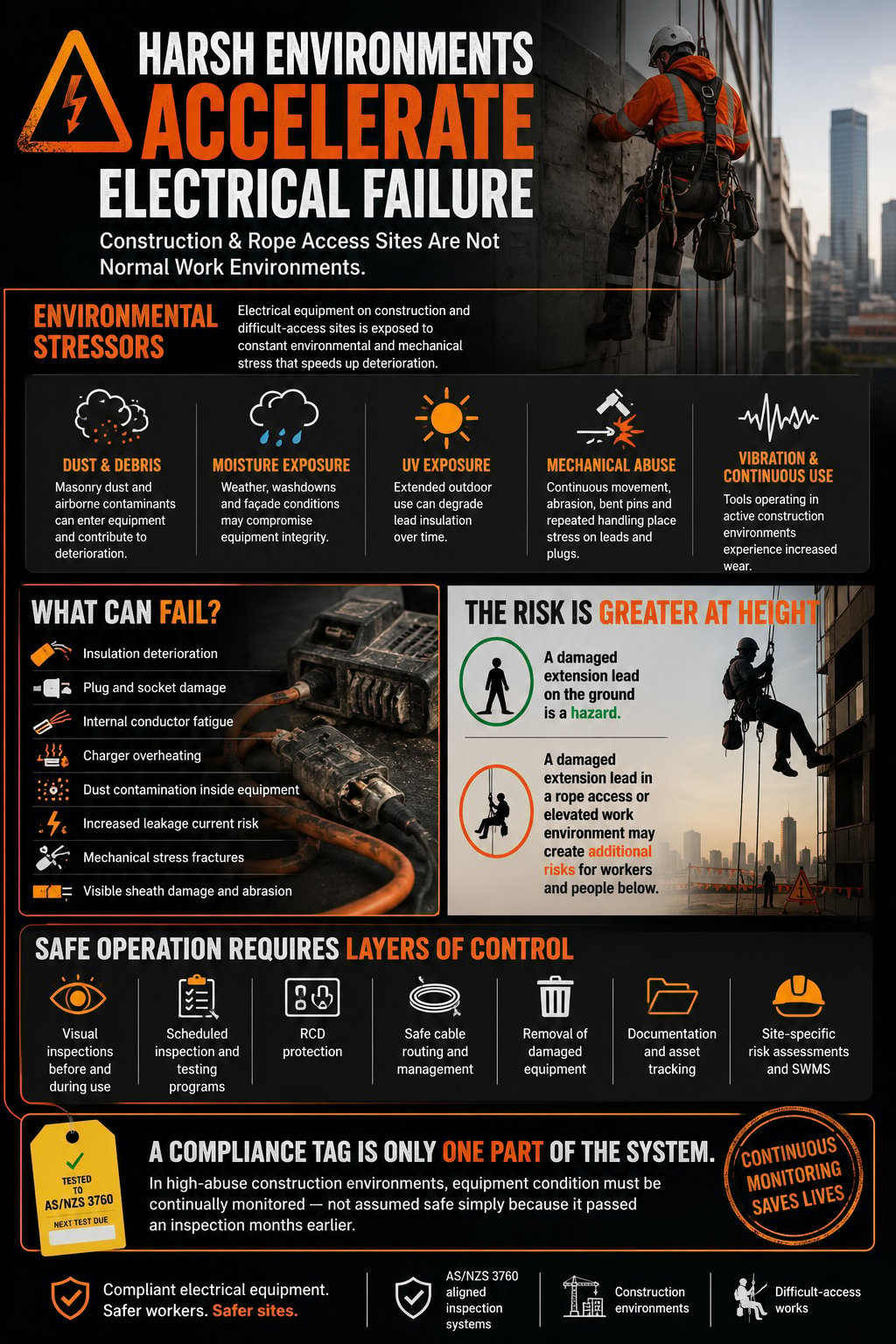
Electrical equipment used during façade remediation and rope access works often operates in conditions far more aggressive than standard office or commercial environments.
On live remediation projects, extension leads, chargers, grinders, drills, vacuums, and portable tools may remain exposed for extended periods throughout balconies, rooftops, temporary work zones, and difficult-access construction areas.
Common environmental stressors include:
On difficult-access projects, these conditions are amplified by suspended work positions, reduced mobility, live pedestrian zones, occupied buildings, and the difficulty of managing hazards in active work areas. A damaged extension lead or deteriorated charger at ground level already presents a safety concern. On difficult-access construction environments, the same fault can present greater risk to workers operating at height and nearby personnel below.
Rope access systems and electrical safety systems must work together to maintain safe operations across difficult-access environments.
SafeWork NSW guidance on working at heights outlines the importance of higher-order risk controls, including fall-prevention systems, work-positioning systems, rescue procedures, and site-specific planning where workers are exposed to fall hazards.
While IRATA-certified rope access technicians manage access methodology, anchor systems, rescue readiness, and suspended work procedures, electrical equipment used throughout the project still requires ongoing inspection, monitoring, and compliance management.
This includes:
On façade remediation projects, electrical equipment is rarely static. Tools and leads are continuously repositioned across balconies, rooftops, temporary work areas, and active construction zones throughout the workday. As a result, inspection systems cannot rely solely on a compliance tag applied months earlier — ongoing visual inspection and monitoring remain critical components of safe site operations.
Construction and difficult-access environments place electrical equipment under constant environmental and mechanical stress.
Masonry dust can enter grinders, chargers, and vents, contributing to overheating and premature equipment deterioration. Moisture exposure may compromise insulation integrity or increase the risk of corrosion within plugs and connectors. UV exposure can weaken outer lead insulation over time, particularly where extension leads remain exposed to outdoor conditions for extended periods.
Continuous use, repeated handling, outdoor exposure, dust contamination, and general construction-site wear can all place additional stress on plugs, connectors, chargers, and extension leads used throughout façade remediation environments.
These conditions can accelerate:
Key Point
This is why hostile construction and difficult-access environments require stronger inspection systems than low-risk office environments. Inspection intervals should reflect actual operating conditions — not solely maximum standard intervals.
Electrical safety on construction and difficult-access projects depends on layered risk management systems rather than a single compliance measure.
Electrical inspection and testing should not operate as an isolated compliance activity. On difficult-access construction environments, it forms part of a broader hierarchy of controls supporting safer site operations.
Inspection and testing procedures should operate alongside:
Safe Work Method Statements (SWMS), rescue procedures, site-specific risk assessments, and controlled work sequencing are critical components of construction and rope access safety systems where workers may be exposed to fall hazards, live environments, and multiple trades operating simultaneously.
Liberty Test & Tag supports construction and difficult-access environments through electrical testing and tagging, leakage testing, RCD testing, digital reporting, and scheduled inspection systems aligned with AS/NZS 3760 requirements. In harsh environments, inspection intervals should reflect actual operating conditions rather than relying solely on maximum standard intervals.
Strong electrical inspection and monitoring systems contribute to safer and more controlled operations across live construction and difficult-access environments.
Key operational benefits include:
Electrical safety systems do not replace rope access systems — and rope access systems do not replace electrical safety systems. Both systems contribute to safer operations on difficult-access projects.
Liberty Test & Tag supports electrical compliance systems across construction, commercial, industrial, and difficult-access environments throughout Sydney and NSW.
Our approach includes:
We operate with a strong focus on practical compliance, risk management, and audit-ready reporting systems designed for real-world construction environments.
Reference
SafeWork NSW – Working at Heights
https://www.safework.nsw.gov.au/hazards-a-z/working-at-heightsLiberty Test & Tag provides electrical testing and tagging, RCD testing, leakage testing, and scheduled inspection systems supporting construction, remediation, industrial, and difficult-access environments across Sydney and NSW.
Learn more about rope access façade remediation and difficult-access works through Ropes & Go, delivering IRATA-certified rope access solutions across live construction and remediation environments.
Ropes & Go delivers IRATA-certified rope access services across Sydney, specialising in façade remediation, inspections, concrete repairs, waterproofing, and difficult-access maintenance across live construction and remediation environments.
Their work focuses on safe access methodology, anchor system management, rescue readiness, and controlled work procedures for suspended and difficult-access environments — including the integration of compliant electrical safety systems across all active projects.
This is a guest blog post from Ropes & Go.