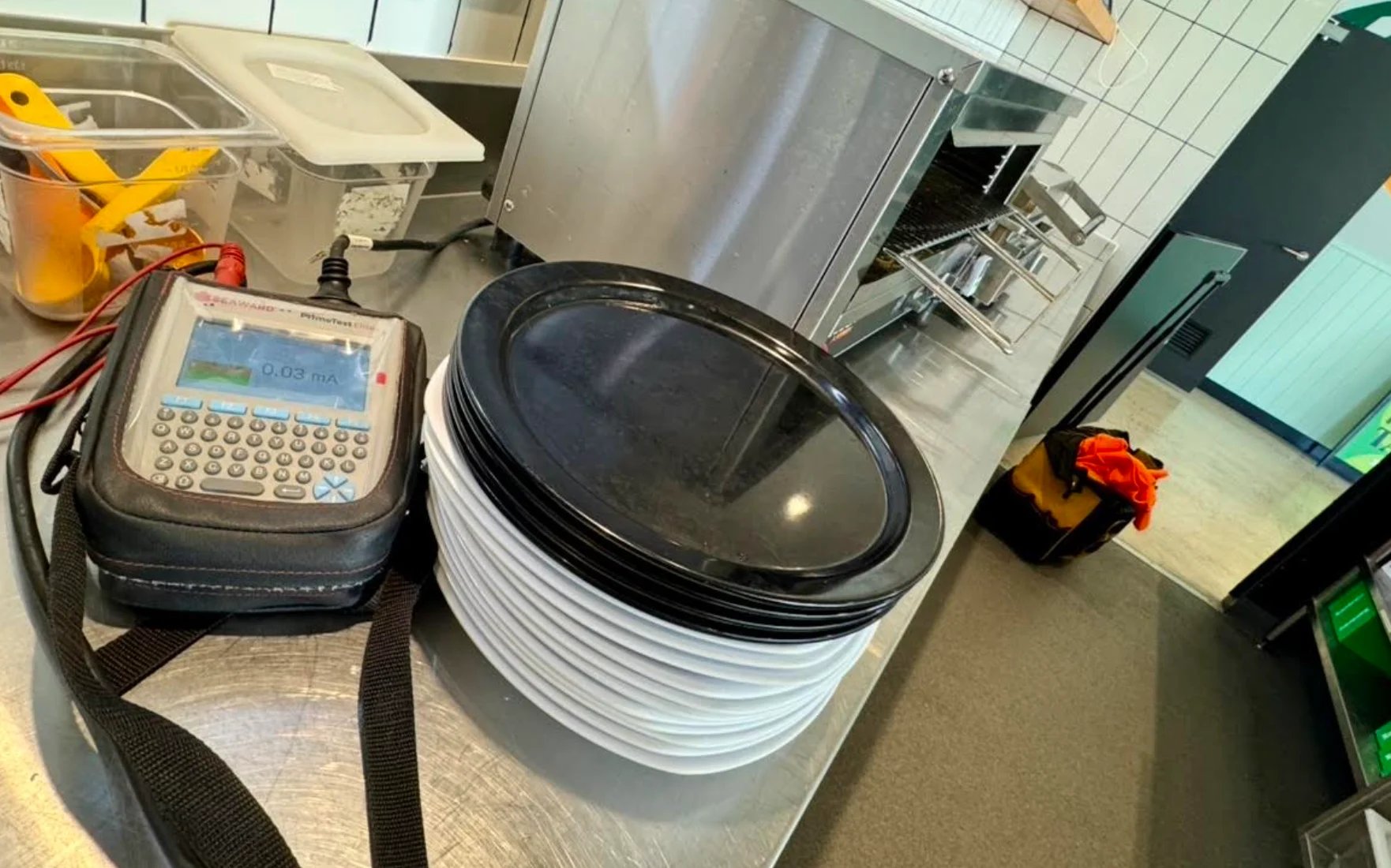
Most aged care facilities have their electrical equipment tested on a regular schedule. Tags are updated, records are kept, and on the surface, everything appears compliant.
Sometimes there is more going on behind the tag.
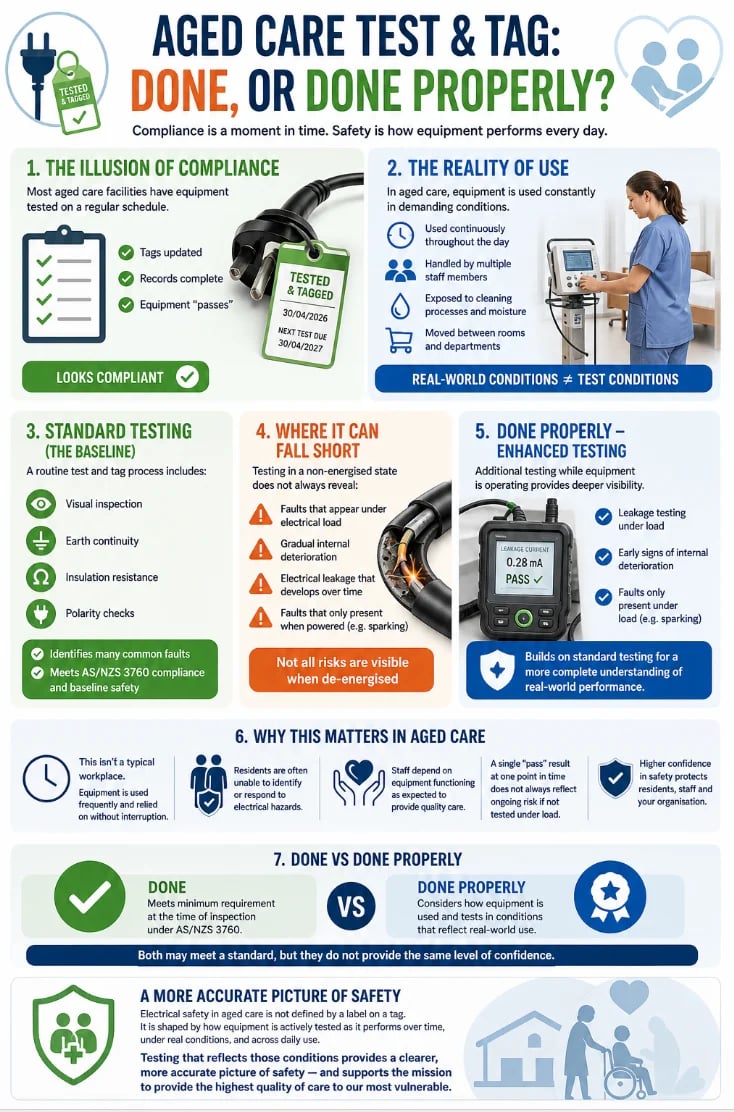
Electrical testing is designed to confirm that equipment is safe and compliant at the time it is checked. In many cases, that assessment is based on the equipment in a controlled, non-energised state.
In aged care environments, equipment is energised; it is handled throughout the day, the cord is flexed, the equipment is moved between rooms, sometimes dropped, and relied on across multiple shifts. The way it performs under electrical load can differ from how it performs when tested at un-energised.
That gap is where issues can arise.
A routine test and tag process includes a thorough visual inspection and electrical testing such as earth continuity, polarity and insulation resistance. These checks confirm that the equipment meets a baseline level of safety and that no obvious faults are present at the time of testing.
This approach is compliant and widely used. When performed correctly, it identifies many common faults and helps maintain a safe working environment.
Testing performed in a non-energised state does not always capture how equipment behaves during normal operation.
In aged care settings, equipment is often:
Some faults develop gradually under these conditions. Others only appear when equipment is powered and in use. These issues may not be visible during a standard test.
Additional testing methods, such as leakage testing performed while equipment is operating, provide a different level of visibility.
They can help identify:
This does not replace standard testing. It builds on it, providing a more complete understanding of how equipment is performing in real conditions, and demonstrates that electrical items are being tested above what is required by AS3760.
In many workplaces, equipment is used occasionally and in predictable ways.
In aged care, it is part of daily operations.
Appliances are used frequently, shared between staff, and relied on without interruption. Residents are often unable to identify or respond to electrical hazards, and staff depend on equipment functioning as expected.
In this environment, a single pass result at one point in time does not always reflect ongoing risk if the item is not tested under electrical load.
The difference is not whether testing is completed. It is how that testing is carried out and what it is designed to reveal.
A basic approach confirms that equipment meets a minimum requirement at the time of inspection under AS3760.
A more thorough approach considers how the equipment is actually used and whether testing methods reflect those conditions.
Both may meet a standard, but they do not provide the same level of confidence.
Electrical safety in aged care is not defined by a label on a tag. It is shaped by how equipment is actively tested as it performs over time, under real conditions, and across daily use.
Testing that reflects those conditions provides a clearer, more accurate picture of safety aged care test and tag — and helps ensure that what appears compliant on paper aligns with the mission and values to provide the highest quality of care to our most vulnerable members of society.
Looking for full testing that reflects how your equipment is actually used in Sydney?
Get in touch to learn more